
NP & USAccountants & Auditors

Published

28 August 2026

Category

News

ALL NEWS

Understanding Carbon Price Relief: What the Carbon Border Adjustment Mechanism Means for UK Importers

Introduction

UK businesses that import goods from abroad must navigate complex regulatory frameworks, particularly when environmental compliance intersects with international trade. Official guidance has been issued to help importers determine whether the embodied emissions in their Carbon Border Adjustment Mechanism (CBAM) goods have already been subjected to a qualifying carbon pricing scheme. For company directors, sole traders, and importers managing cross-border supply chains, understanding these rules is essential to ensure proper compliance and accurate financial planning.

Key Details

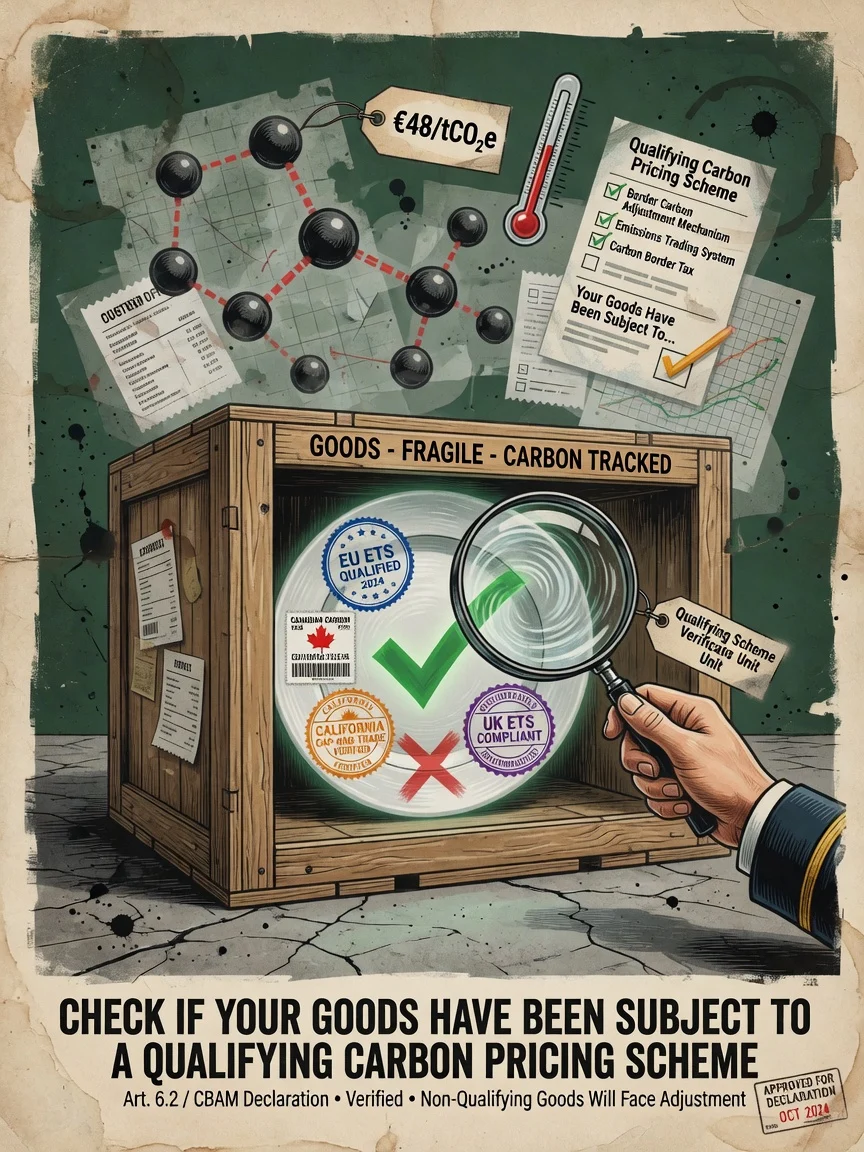
To successfully claim Carbon Price Relief under the upcoming regulatory framework, the carbon pricing scheme linked to your imported goods must satisfy several strict criteria. First, the scheme must be administered by a government authority—such as a state, province, or region—or by a supra-national organisation like the European Union. Furthermore, the governing body must retain control over how the revenue generated by the scheme is utilised.

Additionally, participation in the scheme must be legally mandated by law for industrial installations that manufacture or process CBAM goods. This requirement still applies if mandatory participation is triggered only after an installation exceeds a specific emissions threshold, and businesses may even qualify if they voluntarily join a recognised scheme despite falling below the mandatory limit.

Transparency is another core requirement: the governing rules, scope, and headline carbon price must be publicly accessible. Participants must incur a tangible cost for their emissions, either by directly pricing each tonne of carbon dioxide equivalent (tCO2e) or by indirectly pricing emissions based on fossil fuel usage during manufacturing, calculated using approved methodologies from bodies like the Intergovernmental Panel on Climate Change or the International Energy Agency.

Crucially, certain frameworks do not qualify as carbon pricing schemes. These exclusions include standard fuel duties, purely voluntary schemes, carbon prices not established as a carbon tax or Emissions Trading Scheme (ETS), and initiatives managed by multilateral institutions rather than governments. Importers whose goods meet all qualifying conditions must secure a carbon pricing verification form.

What This Means for UK Businesses

For UK companies engaged in importing goods, keeping meticulous records and understanding supply chain emissions is becoming a critical component of corporate compliance and tax planning. While these environmental measures do not directly alter domestic corporation tax or VAT calculations, they introduce new administrative responsibilities that require careful bookkeeping and operational oversight. Importers must review their current supply arrangements to verify whether existing overseas carbon costs meet official standards, helping to avoid unexpected financial penalties and ensure seamless customs clearance.

Summary

Navigating the requirements for Carbon Price Relief involves verifying that foreign carbon pricing schemes meet strict governmental, transparency, and pricing criteria. Importers must ensure their supply chains comply with these standards and obtain the necessary verification documentation to align with UK trade regulations.

Stay informed with the latest UK tax, accounting, payroll, VAT, HMRC, Companies House and business news from NPUS.

Need Professional Advice?

If you are interested to learn more, feel free to contact us on the below to ensure you are complying today.

Telephone: 0203 4688 788

 ​

Keep reading

Latest News

ALL NEWS
News
↗↗↗

Guidance: Agent update: issue 148

HMRC Releases Agent Update Issue 148: Key Guidance for UK Tax Professionals Introduction HM Revenue and Customs (HMRC) has officially published issue 148 of its Agent Update, providing essential guidance, regulatory news and administrative…

READ ARTICLE
News
↗↗↗

Pay the VAT due on your One Stop Shop VAT Return

Essential Guidance on Paying Your One Stop Shop VAT Return Introduction For UK businesses operating cross-border digital services and distance sales, managing compliance correctly is vital. HM Revenue and Customs (HMRC) has outlined clear…

READ ARTICLE
News
↗↗↗

Post Title

Navigating the Latest UK Financial Updates: What Taxpayers and Business Owners Need to Know Introduction Keeping on top of your financial obligations is essential for every business owner, sole trader, contractor, landlord, and taxpayer…

READ ARTICLE
News
↗↗↗

Guidance: Approved offshore reporting funds

Understanding HMRC’s Approved Offshore Reporting Funds List Introduction HM Revenue and Customs (HMRC) has updated its official register of approved offshore reporting funds, a vital resource for UK investors and taxpayers managing overseas investments.…

READ ARTICLE
News
↗↗↗

Apply for business rates for a self-catering property in Wales

New Guidance Issued for Welsh Self-Catering Holiday Let Business Rates Introduction Property owners operating self-catering holiday accommodation in Wales must navigate specific criteria to qualify for business rates rather than Council Tax. Understanding these…

READ ARTICLE

Get in touch

Contact NP & US

Reach out to us for assistance

Email

info@npus.co.uk

Phone

0203 4688 788

Visit

4 Lytton Road, New Barnet, Barnet EN5 5BY

BOOK A FREE CONSULTATION

Home / News / Check if your goods have been…

News

Check if your goods have been subject to a qualifying carbon pricing scheme

28 August 2026 · News

Understanding Carbon Price Relief: What the Carbon Border Adjustment Mechanism Means for UK Importers

Introduction

UK businesses that import goods from abroad must navigate complex regulatory frameworks, particularly when environmental compliance intersects with international trade. Official guidance has been issued to help importers determine whether the embodied emissions in their Carbon Border Adjustment Mechanism (CBAM) goods have already been subjected to a qualifying carbon pricing scheme. For company directors, sole traders, and importers managing cross-border supply chains, understanding these rules is essential to ensure proper compliance and accurate financial planning.

Key Details

To successfully claim Carbon Price Relief under the upcoming regulatory framework, the carbon pricing scheme linked to your imported goods must satisfy several strict criteria. First, the scheme must be administered by a government authority—such as a state, province, or region—or by a supra-national organisation like the European Union. Furthermore, the governing body must retain control over how the revenue generated by the scheme is utilised.

Additionally, participation in the scheme must be legally mandated by law for industrial installations that manufacture or process CBAM goods. This requirement still applies if mandatory participation is triggered only after an installation exceeds a specific emissions threshold, and businesses may even qualify if they voluntarily join a recognised scheme despite falling below the mandatory limit.

Transparency is another core requirement: the governing rules, scope, and headline carbon price must be publicly accessible. Participants must incur a tangible cost for their emissions, either by directly pricing each tonne of carbon dioxide equivalent (tCO2e) or by indirectly pricing emissions based on fossil fuel usage during manufacturing, calculated using approved methodologies from bodies like the Intergovernmental Panel on Climate Change or the International Energy Agency.

Crucially, certain frameworks do not qualify as carbon pricing schemes. These exclusions include standard fuel duties, purely voluntary schemes, carbon prices not established as a carbon tax or Emissions Trading Scheme (ETS), and initiatives managed by multilateral institutions rather than governments. Importers whose goods meet all qualifying conditions must secure a carbon pricing verification form.

What This Means for UK Businesses

For UK companies engaged in importing goods, keeping meticulous records and understanding supply chain emissions is becoming a critical component of corporate compliance and tax planning. While these environmental measures do not directly alter domestic corporation tax or VAT calculations, they introduce new administrative responsibilities that require careful bookkeeping and operational oversight. Importers must review their current supply arrangements to verify whether existing overseas carbon costs meet official standards, helping to avoid unexpected financial penalties and ensure seamless customs clearance.

Summary

Navigating the requirements for Carbon Price Relief involves verifying that foreign carbon pricing schemes meet strict governmental, transparency, and pricing criteria. Importers must ensure their supply chains comply with these standards and obtain the necessary verification documentation to align with UK trade regulations.

Stay informed with the latest UK tax, accounting, payroll, VAT, HMRC, Companies House and business news from NPUS.

Need Professional Advice?

If you are interested to learn more, feel free to contact us on the below to ensure you are complying today.

Telephone: 0203 4688 788

 ​

Get in touch

Contact NP & US

Reach out to us for assistance

Chartered Certified Accountants & Registered as auditors in the United Kingdom by the Association of Chartered Certified Accountants

ACCA

© 2026 NP & US Accountants and Auditors
Cookie settings
4 Lytton Road, New Barnet, Barnet EN5 5BY